Dead Ahead: Zombie Warfare
MobirateStrategy
4.542.74K Reviews
- Version
- 4.4.2
- Installs
- 10.00M
- Age Rating
- Teen
Screenshots
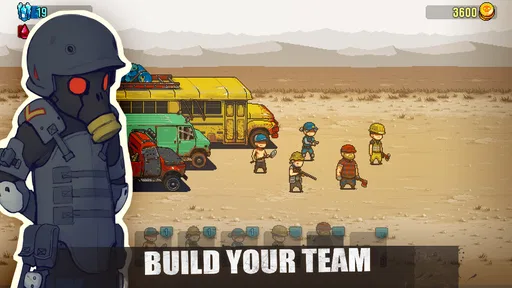
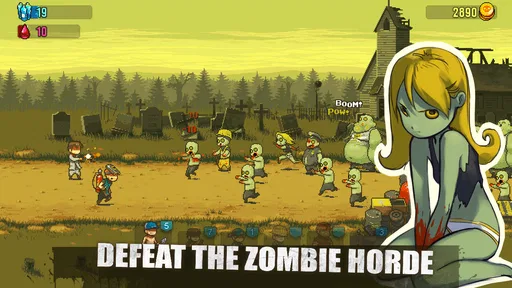
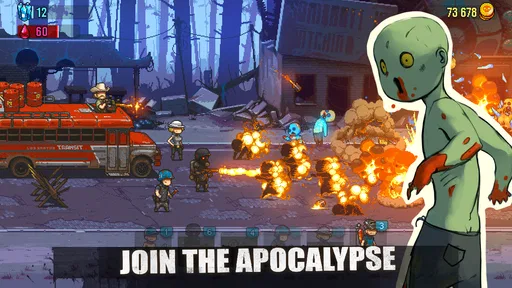
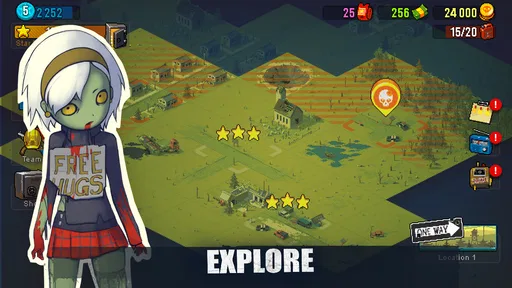
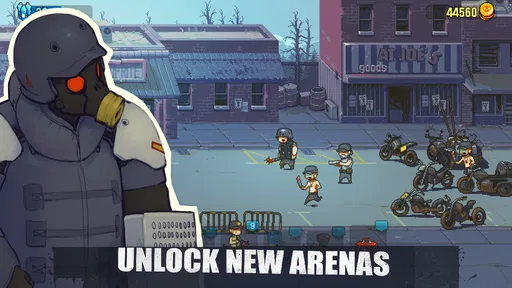
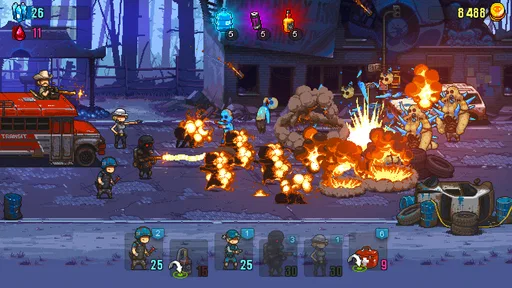
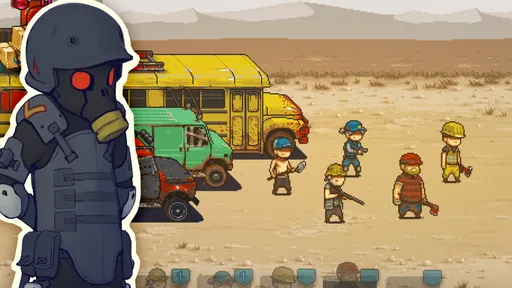
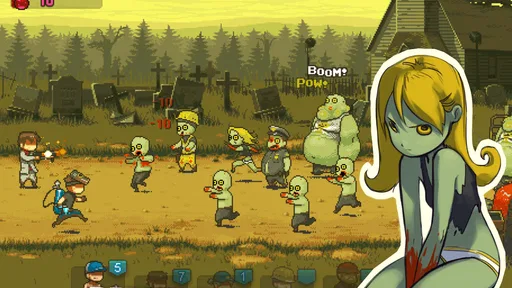
Our Review of Dead Ahead: Zombie Warfare
 Analysis by Appyee
Dead Ahead: Zombie Warfare is the kind of strategy game I can pick up for a short break and still feel that I made a meaningful decision. Its side-scrolling battles look simple at first, but the real challenge comes from choosing when to deploy units, how to spend limited resources, and which threat deserves attention before a small mistake turns into a lost push. I found it more demanding than its cartoon presentation suggests, especially once a careless formation or poorly timed attack leaves the road open to the undead.
Developed by Mobirate, this free game sits in the strategy category and is aimed at Teen players. It has built a substantial audience, with over ten million installs, an average rating of 4.5 from around 881 thousand ratings, and roughly 43 thousand written reviews. Those figures make sense to me: the game is easy to understand in a minute, but it rewards players who learn its rhythm instead of treating every encounter as a button-mashing exercise.
Dead Ahead: Zombie Warfare review
I’ll begin with the game’s immediate appeal: a compact battlefield, a playful visual style, and tactical choices that make each push feel consequential. From there, I’ll look at how its setting and presentation support the strategy, and where its focused approach may not suit every player.
Where new players usually get stuck
The first obstacle is not understanding the objective; it is learning that every unit placement has a cost beyond the immediate attack. Sending several fighters forward may look efficient, yet it can leave you without enough energy to answer a faster enemy or protect the rear. I had better results when I treated each deployment as part of a sequence rather than as an isolated move.
The road layout also encourages a common mistake: focusing only on what is directly in front of the bus. A unit that survives one encounter may be badly positioned for the next one, and a strong attack can become useless if it arrives too late to support the rest of the group. I started watching the whole line, checking the front, the middle, and the area where a new threat was likely to create pressure.
Another sticking point is the difference between winning a battle and winning it efficiently. A victory can still feel expensive if the team reaches the end in poor condition or if the available resources have been spent without creating a lasting advantage. When I replayed difficult stages, I often changed the order of deployment rather than simply choosing stronger units. That small adjustment was frequently more useful than trying to force the same plan again.
The game is also less forgiving if you play while distracted. A quick session during a commute can work, but I would not start a difficult stage while answering messages or switching constantly between tasks. The compact format invites casual play, yet the battles still ask for attention at important moments.
Checks worth making before settling into a session
Because the game is free, it is easy to install it casually and begin without thinking about how you want to play. I recommend deciding early whether you are comfortable with optional spending. In-app purchases range from $0.99 to $104.99 per item, so the sensible approach is to treat purchases as a personal limit rather than as a requirement for enjoying the basic loop. I played more comfortably once I stopped viewing every slow upgrade as a problem that needed an immediate paid solution.
The current version is 4.4.2 and the game requires Android 7.0 or later. That makes the operating-system check the first practical step for Android users, particularly if the device is older or has been kept on an earlier system release. If the installation does not behave normally, I would first check available storage, the device software, and whether the store application itself is functioning correctly before blaming the game.
On iOS or Android, a clean start is useful. I prefer closing other demanding apps, opening the game on a stable connection, and allowing the first launch to finish without repeatedly switching away. This is not complicated maintenance, but it avoids confusing a slow first setup with a permanent gameplay problem.
It is also worth checking the age guidance before handing the device to a younger player. The Teen rating fits the zombie combat and the general tone. The presentation is stylized rather than realistic, but the subject matter is still clearly aimed above very young children.
One setup habit helped me more than I expected: I began each session by looking at my available resources and the condition of my current team instead of immediately entering the hardest available encounter. That gave me a chance to decide whether I wanted a progress attempt, a safer replay, or a short upgrade-focused session. It made the game feel less like a chain of emergencies.
How I recover when a run starts going wrong
When a battle begins to collapse, my first instinct used to be sending another unit into the same crowded area. That usually made the situation worse. A better recovery method is to identify the actual failure: was the front line too weak, was support deployed too late, or did I spend too much before the main threat appeared? Once I named the problem, the next attempt became much more controlled.
I also learned to avoid changing everything at once. If I replaced the whole approach after every loss, I could not tell which decision had helped. Instead, I changed one variable, such as delaying the first deployment or saving enough resources for a response. This is a practical way to learn the stages because the game’s strategy becomes clearer when each attempt provides a usable comparison.
For a difficult encounter, I like to make a conservative first attempt. I watch how quickly pressure builds, which lane or position becomes dangerous, and how much time I have before a defensive gap appears. Then I replay with a plan built around that information. This scouting mindset is one of the game’s less obvious strengths: failure can be useful when it reveals timing rather than merely punishing the player.
If progress feels stalled, repeating an earlier stage can be more productive than throwing resources at the newest obstacle. Earlier battles give me room to practice deployment order and confirm whether a change in team composition actually works. They also provide a calmer way to return to the game after a break, because I can rebuild confidence without immediately facing the most demanding situation.
Another recovery tip is to pause mentally between waves or major exchanges, even if the game does not require a formal pause. I check which units are still active, what the next deployment should accomplish, and whether I am reacting emotionally to a lost unit. That short reset prevents panic spending and keeps the battle focused on the next useful action.
When the game is not really the cause of the trouble
Not every failed session points to a balance issue or a technical fault. Sometimes the problem is simply a poor match between the game and the way I want to play that day. Dead Ahead: Zombie Warfare expects attention, repeated attempts, and a willingness to learn from small tactical errors. If I want a completely passive experience, a story-first adventure, or a strategy game with long uninterrupted planning phases, another option may suit me better.
The free-to-play structure can also be the source of friction for players who dislike any pressure around progression. Even when I chose not to spend, I had to accept that improvement would sometimes come through patience and repetition. That is manageable for me, but someone who wants every unit or upgrade immediately may find the pace irritating. The broad purchase range makes it especially important to use device-level spending controls if several people share the same device.
Connection and device conditions can create misleading symptoms. If the game loads slowly, closes unexpectedly, or behaves inconsistently, I would first restart the app, check the operating system requirement, free some storage, and try again on a reliable connection. I would also avoid repeatedly tapping during a delayed response, since that can make it harder to tell whether an action registered. These are simple checks, but they separate an isolated setup issue from a genuine recurring problem.
Battery and heat are practical considerations for any game session, especially on an older phone. I found shorter sessions easier to manage than leaving the game open while doing other things. Closing it fully after playing and avoiding a crowded background workload are sensible habits. If the same issue appears across other games or apps, the wider device condition is a more likely explanation than this particular title.
There is also a human cause: impatience. When I returned after several days away, I often played too aggressively because I remembered the broad objective but not the exact timing. Replaying an easier stage first helped me recover the feel of deployment and resource control. In that situation, the app was not failing; I was simply rusty.
What makes its strategy loop worth learning
The strongest part of the game is the way it turns a narrow battlefield into a sequence of trade-offs. I am not merely asking which unit is strongest. I am asking whether the current moment is safe enough to attack, whether a cheaper response is sufficient, and whether holding back now will create a better push later. That makes each stage feel more like a timing puzzle than a straightforward march to the finish.
I especially liked the value of deliberate staging. Instead of filling the road immediately, I often waited until a deployment would support the next exchange as well as the current one. This reduced wasted attacks and gave my group a better chance of maintaining momentum. It is a small habit, but it separates thoughtful play from repeatedly sending units forward and hoping numbers solve everything.
The game also works well in an everyday scenario such as a ten-minute break between errands. I can complete a short session, notice one tactical mistake, and return later with a specific improvement in mind. I would not recommend beginning a demanding stage while standing in a checkout line, but the compact structure is convenient when I have a little time and want something more engaging than an idle game.
Compared with many mobile strategy alternatives, this feels more immediate and battle-focused. It does not ask me to manage a large empire or spend a long time arranging menus before seeing the result of a decision. On the other hand, players who enjoy deep city construction, extensive diplomacy, or broad map control may find its narrower road-based format limiting. Its appeal comes from concentrated tactical choices, not from offering every kind of strategy at once.
The zombie theme is useful rather than decorative. It creates clear pressure and makes the forward movement easy to understand, but the game’s lasting appeal comes from resource timing and positioning. If the undead setting does not interest you, the strategy still has substance; if you mainly want horror atmosphere, the stylized presentation may feel lighter than expected.
Who should play, and who should skip it
I would recommend it to players who enjoy short tactical encounters, gradual improvement, and experimenting with the order in which units enter a fight. It is a good fit for someone who likes learning through retries rather than expecting to clear every stage immediately. The controls and objective are approachable, while the later decisions can still demand concentration.
I would be more cautious recommending it to anyone who dislikes repetition or becomes frustrated when a failed attempt offers no instant reward. The game asks for patience. It is also not my first choice for a child because the Teen rating and zombie combat are part of the experience, even though the visual style is animated.
Players with limited storage or an older Android device should confirm that Android 7.0 or later is available before planning around it. Likewise, people who want a completely purchase-free environment should decide whether the optional purchase structure will bother them. I had a positive experience without treating purchases as mandatory, but that depends on being comfortable with a slower, more deliberate route through progression.
My practical verdict after playing
The best way to enjoy Dead Ahead: Zombie Warfare is to treat it as a timing game first and a zombie game second. Save resources for meaningful moments, study why a stage went wrong, and change one decision at a time. Those habits make the experience considerably less frustrating and reveal the strategy beneath the simple presentation.
Mobirate has made a free strategy game that is easy to enter but not entirely effortless to master. Its 2017 release has not stopped it from remaining relevant to a large mobile audience, and version 4.4.2 gives new players a clear starting point. I appreciate that it can fit into a short break while still rewarding a player who pays attention to timing, positioning, and recovery.
My main reservations are the patience required for progress, the possibility of purchase pressure, and the fact that its focused format will not replace a full-scale strategy game for everyone. Still, those limitations are straightforward to understand before installing. For me, the balance works: I get quick battles, useful tactical lessons, and a reason to retry without needing a long session.
At no cost to download, with a Teen rating and support for Android 7.0 or later, it is easy to try if you enjoy mobile strategy with a compact battlefield. I would start with a few relaxed sessions, avoid spending until the progression feels clear, and use early losses as information. If that learning process sounds satisfying rather than annoying, Dead Ahead: Zombie Warfare is a strong recommendation for your next short strategy session.
Verdict
Strengths of Dead Ahead: Zombie Warfare
- Easy-to-learn controls make battles accessible to casual players.
- Distinct survivor classes encourage varied team-building strategies.
- Offline play lets you enjoy many battles without an internet connection.
- Short missions fit well into quick gaming sessions.
- Distinctive cartoon visuals give the zombie theme a playful style.
Limitations of Dead Ahead: Zombie Warfare
- Energy limits can interrupt progress during longer play sessions.
- Later missions may require repeated grinding for upgrades.
- Some units and resources are tied to premium purchases.
- Enemy difficulty can spike unexpectedly between missions.
- Limited base customization reduces the sense of long-term progression.
Other Releases by Mobirate
View All
Big Rig Racing: Drag racing
Racing4.6
Similar Picks in This Category
View All
Clash of Clans
Supercell4.5

Plants vs. Zombies™
ELECTRONIC ARTS3.7

Lords Mobile: Kingdom Wars
IGG.COM4.5

Clash Royale
Supercell4.4

State.io — Conquer the World
CASUAL AZUR GAMES4.1

Car Driving School : Car Games
Spark Game Studios3.9
Frequently Asked Questions
What is Dead Ahead: Zombie Warfare about?
Dead Ahead: Zombie Warfare is a strategy game that combines lane-based combat, zombie survival, and resource management. You lead a group of survivors through a dangerous post-apocalyptic world, deploy fighters and vehicles, defeat waves of undead enemies, and reclaim locations. Each unit has different strengths, costs, and abilities, so choosing the right team is essential for progressing through difficult missions.
Is Dead Ahead: Zombie Warfare free to download and play?
Yes, Dead Ahead: Zombie Warfare is free to download on supported Android and iOS devices. However, the game includes optional in-app purchases that can provide resources, upgrades, or other conveniences. It is possible to make progress without paying, but free players may need more patience because energy systems, upgrade requirements, and challenging missions can slow progression.
Does the game require an internet connection?
Dead Ahead: Zombie Warfare may allow some gameplay features to work without a constant connection, particularly when completing basic missions on a compatible device. Nevertheless, an internet connection is generally needed for advertisements, purchases, account synchronization, updates, and certain online features. Availability can vary by version and platform, so offline functionality should not be considered guaranteed.
What kind of gameplay and progression can players expect?
Gameplay focuses on sending survivors into different lanes, collecting courage points, and deploying units at the right moment to defeat zombies and enemy groups. Between missions, you can improve characters, unlock new survivors, upgrade equipment, and manage resources. Progression becomes increasingly tactical, requiring careful squad selection rather than simply relying on the strongest available unit.
Is Dead Ahead: Zombie Warfare suitable for children?
The game uses stylized, cartoon-like graphics rather than realistic horror visuals, but it still features frequent zombie attacks, combat, weapons, explosions, and post-apocalyptic themes. Parents should also be aware of optional in-app purchases and advertising. The appropriate age rating may differ between Google Play and the App Store, so checking the current store listing is recommended before installation.
Play our best games!


